Tree Trimming and Pruning: Cuts That Help the Tree
Trimming and pruning remove selected branches so a tree stays healthy, safe and a sensible size for its spot. Good pruning takes out dead, broken and crossing limbs, thins a crown that catches too much wind, and shapes young trees so they develop a strong frame. It should be done with a plan for the tree, not just a goal of making it smaller.
Describe the job and add your city. Free to request, no obligation.
Owners usually search for this after noticing dead branches, limbs over the roof, a crown that blocks light or a young tree growing crooked. Pruning does not change much in how the tree looks if it is done well. A tree that looks heavily cut back afterward was probably topped, and topping leaves large wounds that rot and sprout weak, fast regrowth.
Timing and method matter as much as how much comes off. Most deciduous trees prune best in late winter, while some species have restricted windows because of disease. The quote should tell you what is being removed and how many cuts the crew expects to make.
What the work includes
- Removal of dead, dying and broken branches
- Thinning to let wind and light through a dense crown
- Removing crossing or rubbing limbs that create wounds
- Structural pruning of young trees to guide their growth
- Cuts made just outside the branch collar so wounds can seal
- Work by climbing or from a bucket truck, depending on reach
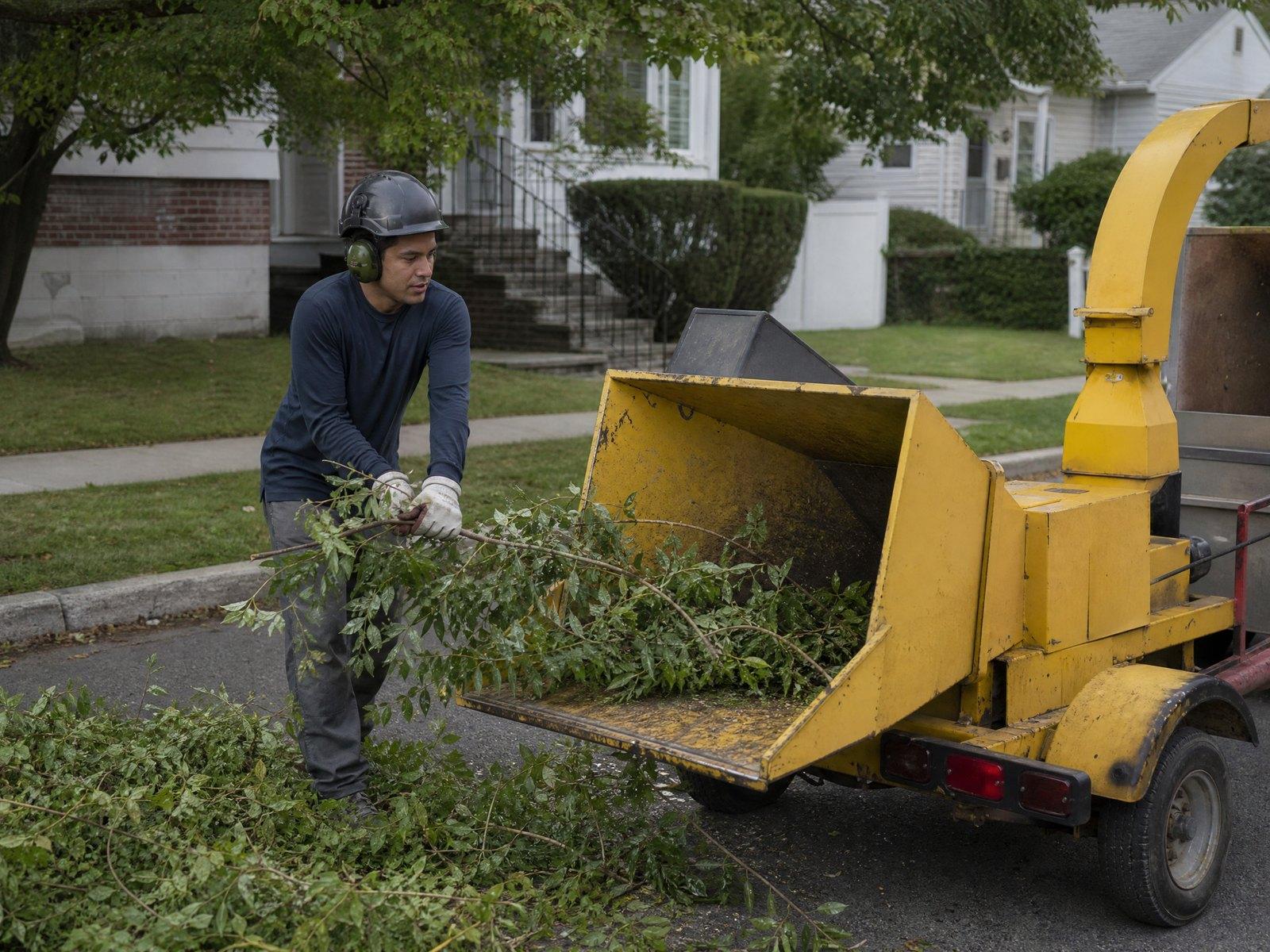
- Chipping and hauling away the cut branches
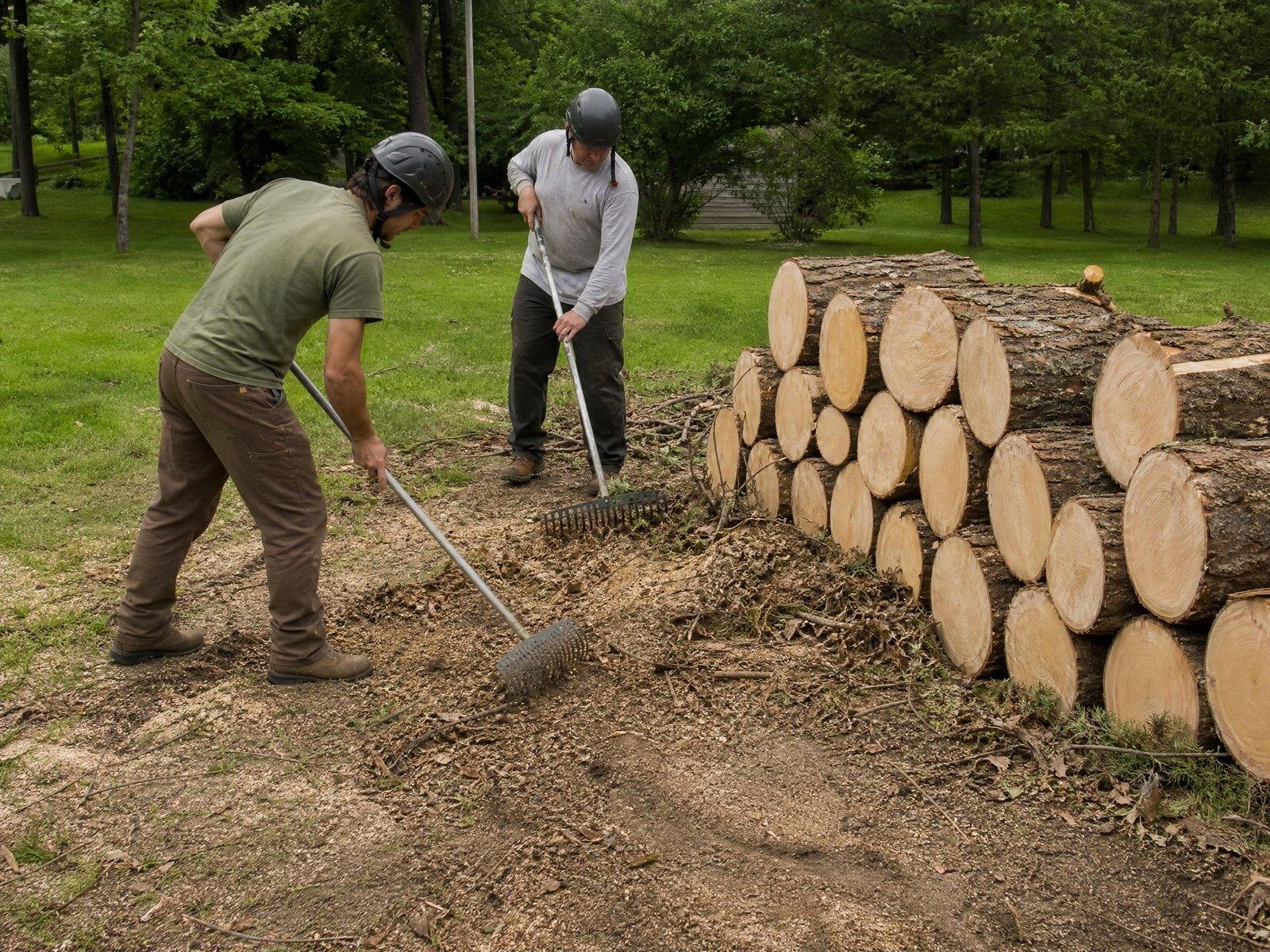
- Cleanup of the lawn, patio and driveway
Why a tree may be due for pruning
Dead branches that stay bare when the rest of the tree leafs out
A crown so thick that grass underneath struggles and the tree sways heavily in wind
Branches rubbing against each other and leaving open wounds
Low limbs that catch on trucks, mowers or people walking underneath
Water sprouts shooting straight up from old cuts or the trunk
A young tree with two competing leaders that will form a weak fork later
How the work goes, step by step
Say what bothers you
Mention the problem (dead limbs, low branches, too much shade) and attach photos of the whole tree.
Tree check
A specialist looks at the tree's health and structure to decide which branches should go, not just the ones in the way.
Pruning plan
The quote names the goal, such as dead wood removal, crown thinning or lifting, and how much of the crown will come off.
Written quote
Scope, access method and cleanup are listed. Anything that sounds like topping should raise a question.
The pruning
Cuts are made, debris cleared and the tree is left balanced, with a quick walkthrough for you.
What changes the price
- Size of the tree
- A small ornamental takes a fraction of the time a tall oak or maple takes.
- Amount removed
- A light dead-wood cleanup is quick, while a full crown thin involves many more cuts.
- Climbing or lift
- Tall trees that need a bucket truck add equipment cost, and tight yards can rule it out.
- Obstacles below
- Roofs, wires, pools and gardens slow the lowering of branches.
- Number of trees
- Several trees in one visit usually cost less per tree than separate trips.
- Debris handling
- Chipping and hauling away adds time compared with leaving brush piled for you.
What a good quote spells out
- The pruning goal in plain words, such as dead wood removal, crown thinning or lifting
- A limit on how much live crown is removed, so the tree is not over-pruned
- No topping or stub cuts, which the quote can state outright
- Whether the work happens in the right season for your tree species
- Proof of liability insurance and workers coverage, which you can ask to see before work starts
Tree Trimming & Pruning: questions people ask
What is the best time of year to prune trees?
For most leafy trees, late winter while they are dormant is a good choice: the branch structure is visible and cuts close well in spring. Dead or dangerous limbs can come off any time. Oaks in some regions should not be cut during warm months because of disease risk.
What is the difference between trimming and pruning?
People use the terms loosely. Trimming usually means shaping or tidying, and pruning means removing branches for health or structure. For the quote, what matters is which branches come off and why.
How much of a tree can be removed at once?
A common guideline is to keep removal modest, well under a quarter of the live crown in a single visit, and less for older trees. Over-pruning stresses the tree and invites regrowth that is weaker than what was cut.
Is topping a tree ever a good idea?
Rarely. Topping cuts large limbs to stubs, leaves wounds that rot and encourages fast, poorly attached shoots. Reducing a tree's height properly means cutting back to a suitable side branch, which a good quote will describe.
Other Turnex services
A Tree That Needs Work? Get It Looked At.
Fill out the quote form with your city and a short description of the tree. A local specialist follows up to look at the job and give you a written quote. Free to request, no obligation.
Request a free quote →