Tree Removal: How a Tree Comes Down Safely
Tree removal means taking a whole tree down, either in one piece where there is room or in sections where there is not, and then dealing with the wood. The method depends on what is underneath: an open lawn allows a straight fell, while a tree beside a house, a garage or a fence is cut apart from the top and lowered on ropes.
Describe the job and add your city. Free to request, no obligation.
Most people searching for this have a specific tree in mind: an ash that died, a maple that has started to lean, a poplar with roots in the drain, or a pine that now towers over the roof. Removal is the right call when a tree is dead, badly decayed, structurally unsound or simply in the wrong place. A healthy tree that is only too large can sometimes be pruned instead, and an honest quote will say so.
The tree itself is only part of the job. Chipping the brush, cutting the trunk into rounds, hauling everything away, grinding the stump and checking whether the city needs a permit all change the number on the quote, so these should be written down before anyone starts a saw.
What the work includes
- Climbing, bucket truck or crane work, depending on the tree and the site
- Cutting the tree into pieces and lowering them where roofs or wires are close
- Chipping branches and brush
- Cutting the trunk into rounds or firewood lengths, or hauling it away
- Ground protection such as plywood mats over lawns and driveways
- Raking and blowing the work area clean
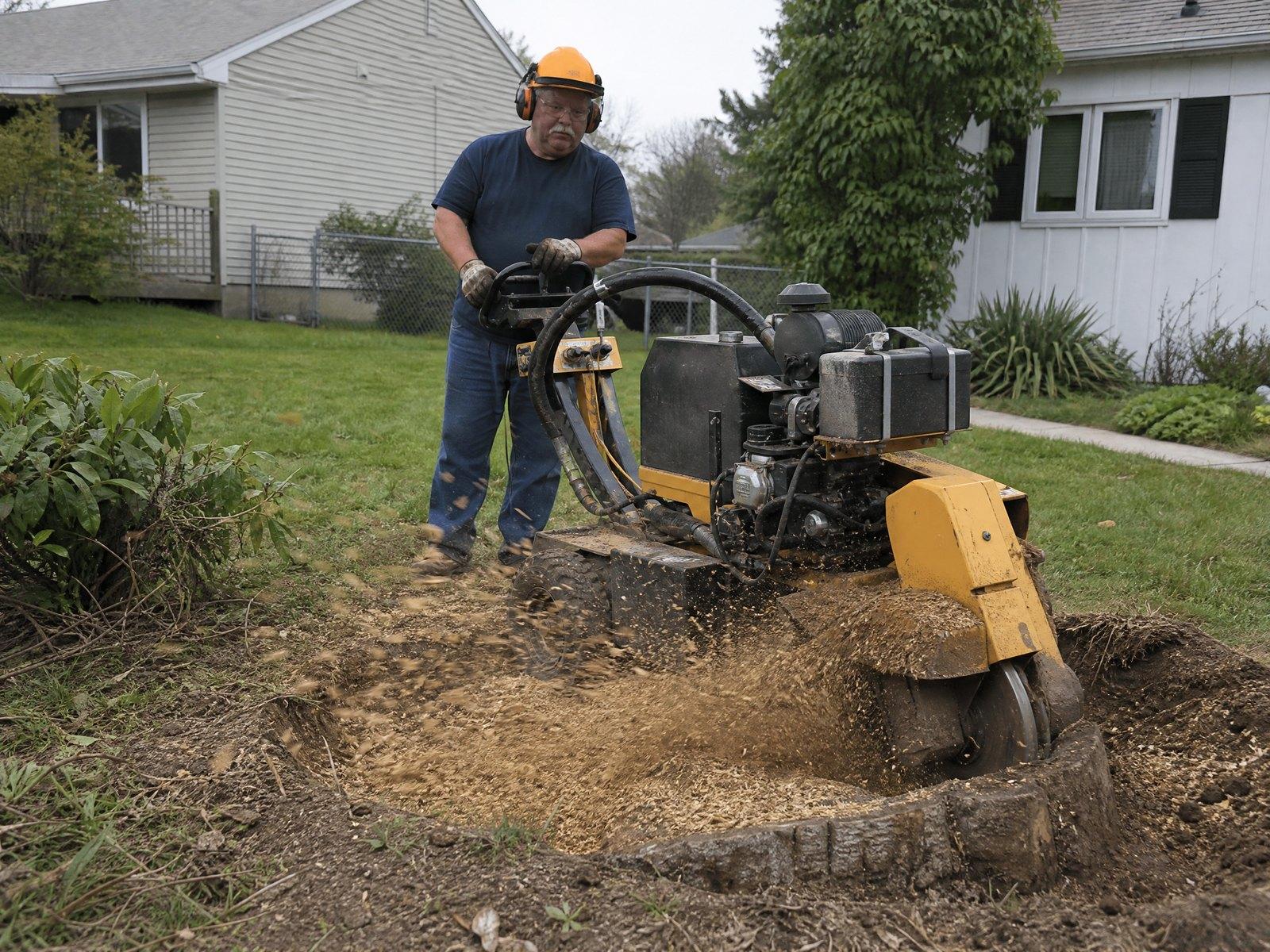
- Stump grinding, listed as an option
- Help identifying whether your city requires a removal permit
When a tree is a removal candidate
No leaves in summer, bark peeling off in sheets, or brittle twigs that snap instead of bending
Mushrooms or shelf fungus at the base of the trunk or on the roots
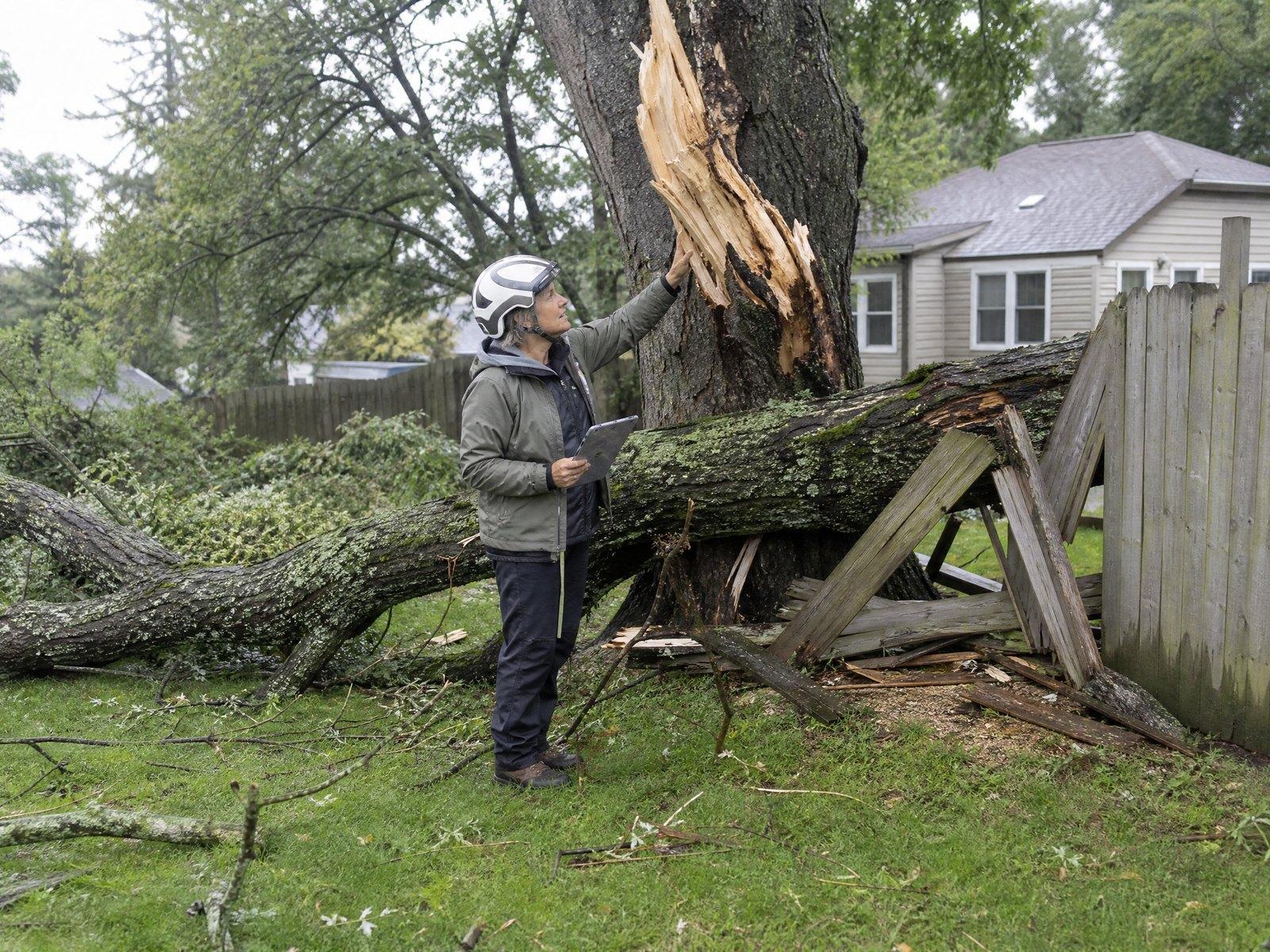
A trunk with a deep crack, an open cavity or a seam that keeps widening
A lean that has grown worse, or soil heaving up on the opposite side
Roots lifting a driveway or pushing into a foundation or sewer line
A tree killed by borers, such as an ash with D-shaped holes in the bark
How the work goes, step by step
Describe the tree
In the quote form, give the city, the kind of tree if you know it, its rough height and what stands near it. Photos from two sides help.
Site look
A specialist checks the tree, its health and lean, wires, buildings, and how equipment can reach the spot.
Method chosen
Straight fell, climbing and rigging, bucket truck or crane. The reason for the choice goes into the quote.
Written quote
Method, cleanup, stump, permit handling and lawn protection are itemized so you can compare offers.
Removal and walkthrough
The tree comes down, the debris is handled as agreed, and you check the result before the job is closed.
What changes the price
- Height and trunk width
- Taller, thicker trees mean more pieces to cut, more rigging time and more wood to handle.
- What is underneath
- A house, pool, fence or greenhouse below the drop zone forces slower, section by section work.
- Access for equipment
- A narrow side yard with no truck access means hand carrying and chipping far from the tree.
- Crane or lift
- Large trees over structures may need a crane, which is priced by the hour and adds a set-up cost.
- Cleanup you choose
- Leaving the wood behind costs less than hauling it away, and firewood cutting is another line.
- Condition of the tree
- A dead tree can be brittle and unpredictable, which slows the work and calls for extra care.
What a good quote spells out
- The removal method named, and whether a crane or lift is part of the price
- What happens to the trunk and branches: chipped, hauled, left as rounds or cut for firewood
- Whether stump grinding is included, and to what depth
- Who applies for the city permit, if one is needed, and who pays the fee
- Proof of liability insurance and workers coverage, which you can ask any company to show before work starts
Tree Removal: questions people ask
Do you need a permit to remove a tree on your own property?
Often, yes, depending on the city. Many municipalities protect trees above a certain trunk width, certain species, or every tree in some zones, and fines can be large. Check with your city before booking, and ask the quote to say who handles the application.
Is it cheaper to remove a dead tree than a living one?
Not necessarily. Dead wood can be brittle and unpredictable, so crews often work more slowly and with more rigging. The real price drivers are height, access and what the tree could hit.
Can a tree be taken down without damaging the lawn?
Mostly, yes. Plywood or mat ground protection spreads the weight of equipment, and pieces can be lowered on ropes instead of dropped. Deep ruts are still possible on wet soil, so ask when and how the lawn will be protected.
What happens to the wood after the tree comes down?
That is up to the quote. Branches are normally chipped, and the trunk can be hauled away, left in rounds or cut into firewood. Make sure the quote states which, because haul-away is often a separate line.
Other Turnex services
A Tree That Needs Work? Get It Looked At.
Fill out the quote form with your city and a short description of the tree. A local specialist follows up to look at the job and give you a written quote. Free to request, no obligation.
Request a free quote →