Tree Removal & Tree Care in Aurora
A dead tree leaning toward the house, branches over the roof, a stump in the middle of the lawn, or a limb down after a storm. Send us the details and a specialist who works in your area looks at the tree, the access and the risks, and puts the job in a written quote.
Get a Turnex quote in Aurora
Fill out the quote form with your city and a short description of the tree. A local specialist follows up to look at the job and give you a written quote. Free to request, no obligation.
- Written quotes
- Cleanup spelled out
- Homes and small properties
- Storm damage requests
Wet spring snow on leafed-out cottonwoods and ash breaks branches along the Front Range, while emerald ash borer is killing ash trees. Dry, windy weather and wildfire mitigation add pruning and clearing requests near foothills homes.
Eight Tree Services in Aurora
From one overgrown maple to a backyard full of storm debris, every job starts with the same questions: what does the tree need, what is around it, and how can the work be done safely?
Tree Removal in Aurora
Removal of dead, dying, leaning or unwanted trees, taken down in sections where there is no room to fell them.
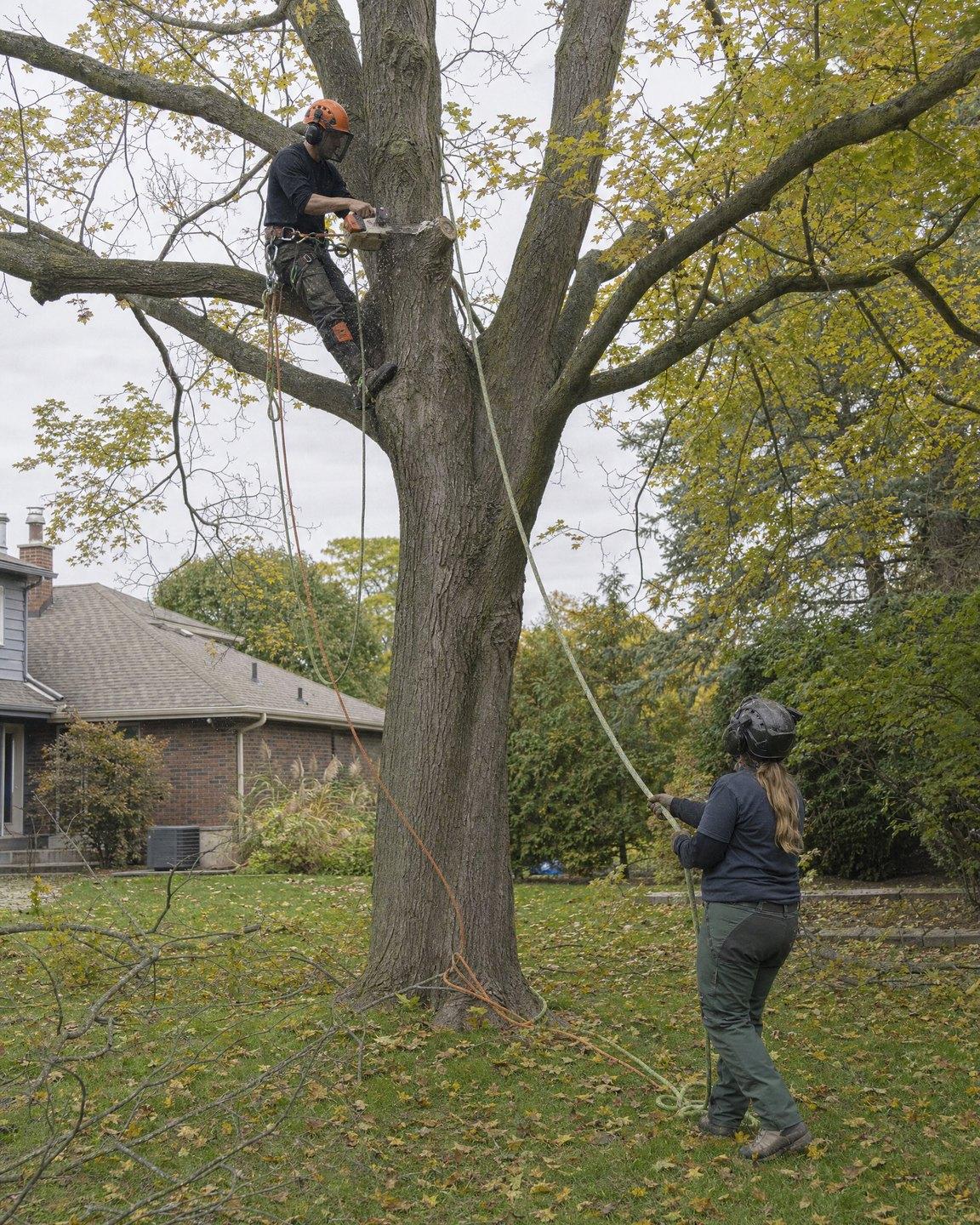
In an open yard a tree can sometimes be felled in one piece. Near a house, a fence or wires, it is taken down in sections: a climber or a bucket truck cuts pieces from the top down and lowers them on ropes, and very large trees sometimes need a crane. The quote should say which method is planned, what happens to the wood and branches, and whether the stump is included.
Tree Trimming & Pruning in Aurora
Removing dead wood, thinning dense crowns and shaping young trees so they stay healthy and safe.
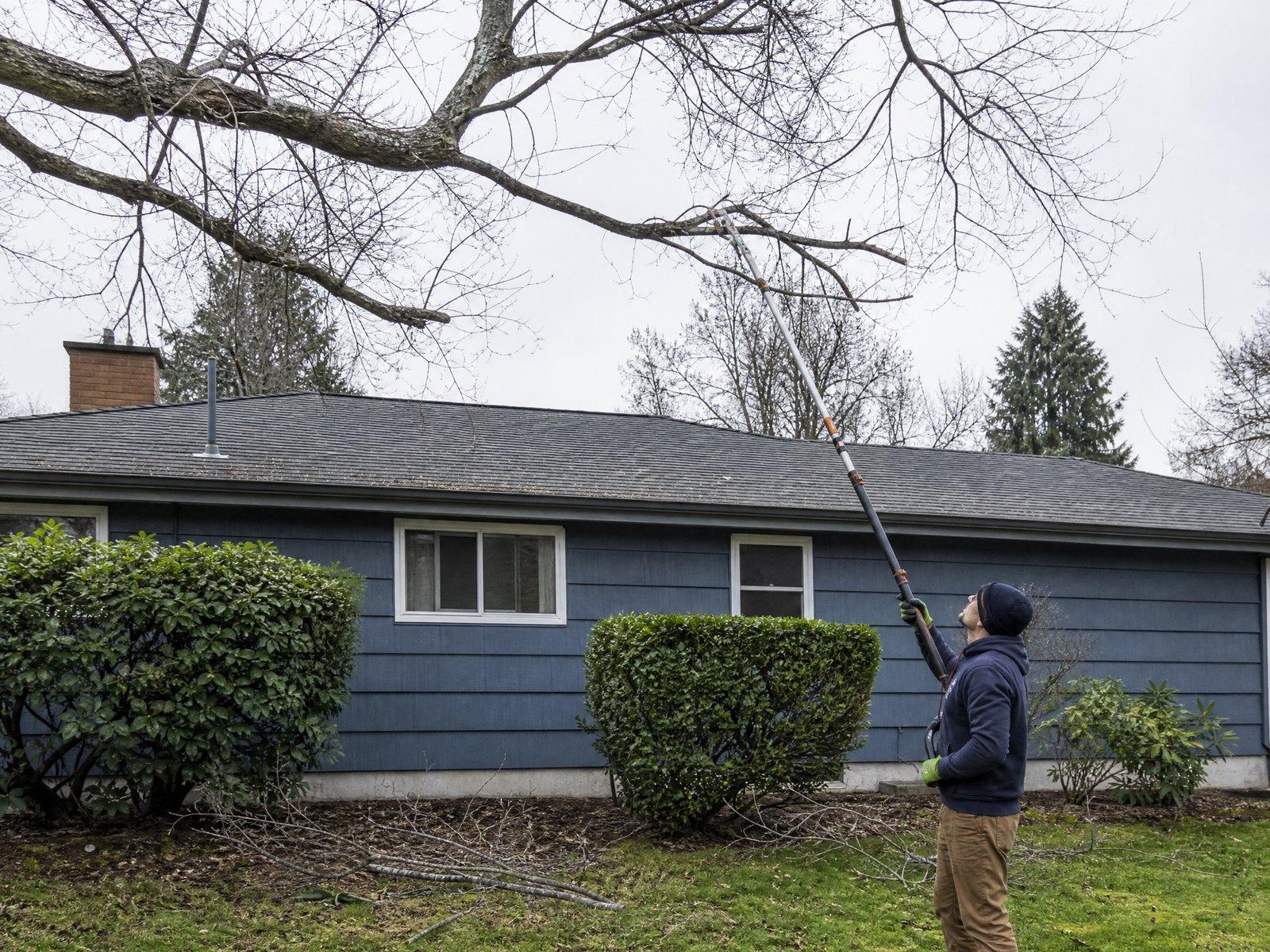
Good pruning removes dead, broken and crossing branches, thins a crown that catches too much wind, and gives young trees a strong structure. Cuts are made just outside the branch collar so the tree can seal the wound. Topping, which cuts large limbs back to stubs, weakens the tree and invites rot, so it should not be part of the quote.
Stump Grinding in Aurora
Grinding stumps below ground level so you can seed, plant or build over the spot.
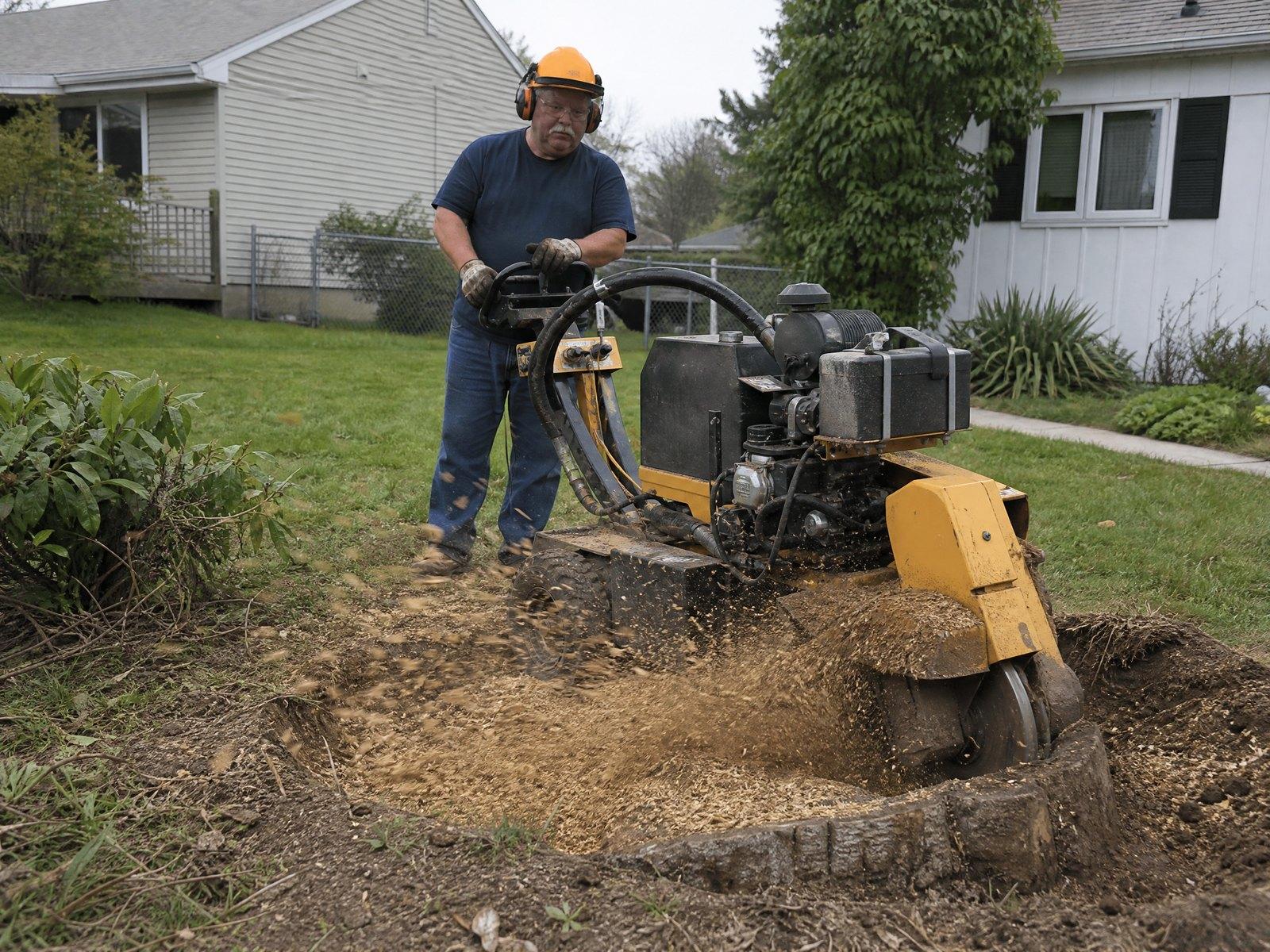
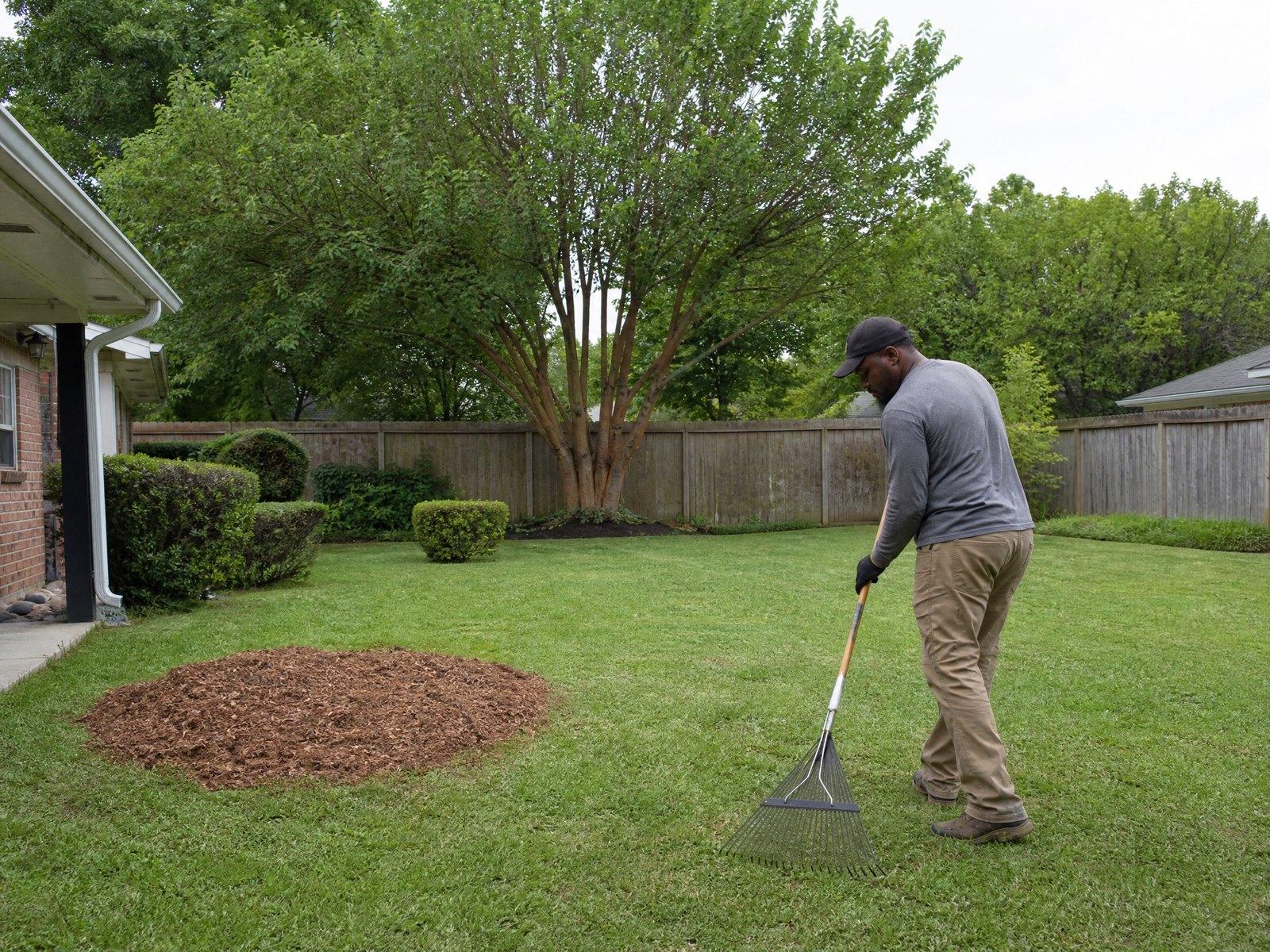
A stump grinder chips the stump and the top of the main roots down to several inches below grade. Depth matters if you plan to plant a tree, lay sod or pour a patio there. Grinding leaves a pile of chips mixed with soil, which can be used as mulch, left in the hole, or hauled away and replaced with topsoil. Buried utilities near the stump should be located first.
Emergency Storm Cleanup in Aurora
Removal of trees and large limbs that came down on a house, car, fence or driveway after wind, ice or snow.
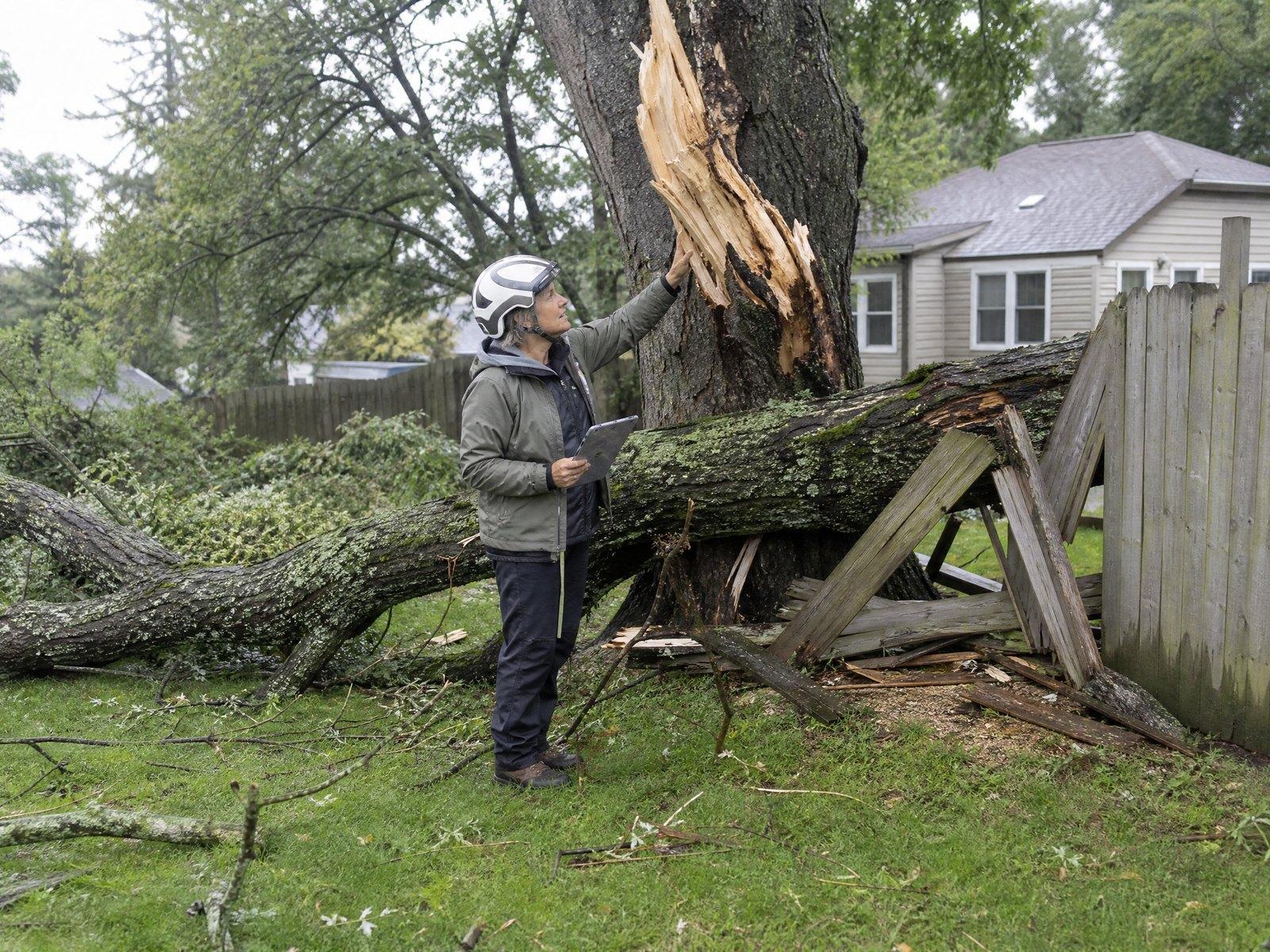
After a storm, a tree resting on a roof or hung up in another tree is under tension and can shift without warning. Removing it safely takes rigging and experience, and sometimes a crane to lift it off the structure. If wires are involved, the electric utility has to make the area safe first. Keep photos for your insurer and ask for a written scope you can send to your adjuster.
Hazard Tree Assessment in Aurora
A look at a tree you are worried about: decay, cracks, lean, dead limbs and root problems.
Signs that a tree may fail include fungus at the base, cavities or cracks in the trunk, a lean that is getting worse, soil heaving on one side, large dead branches, and a tight V-shaped fork. An assessment looks at the tree and what it could hit, then recommends whether to monitor, prune, support or remove it. Some cities ask for an arborist report before approving a removal permit.
Cabling & Bracing in Aurora
Cables and rods that support weak forks and heavy limbs on trees worth keeping.
A tree with two large stems joined in a tight V, or a long heavy limb over the house, can split under wind or snow load. Cables installed high in the crown limit how far the stems can move apart, and rods through the trunk can hold a weak union together. Cabling is usually combined with pruning to reduce weight, and the hardware should be checked every few years.
Roof & Clearance Pruning in Aurora
Cutting branches back from roofs, chimneys, siding, driveways and the service line to the house.
Branches that rub on shingles, drop leaves into gutters or hang low over the driveway are some of the most common reasons people ask for tree work. Clearance pruning removes the limbs causing the problem while keeping the tree balanced. Branches near the electric service line to the house may need the utility to disconnect or cover it first, which the quote should mention.
Lot Clearing & Brush Removal in Aurora
Clearing overgrown brush, small trees and fallen wood from yards, fence lines and small lots.
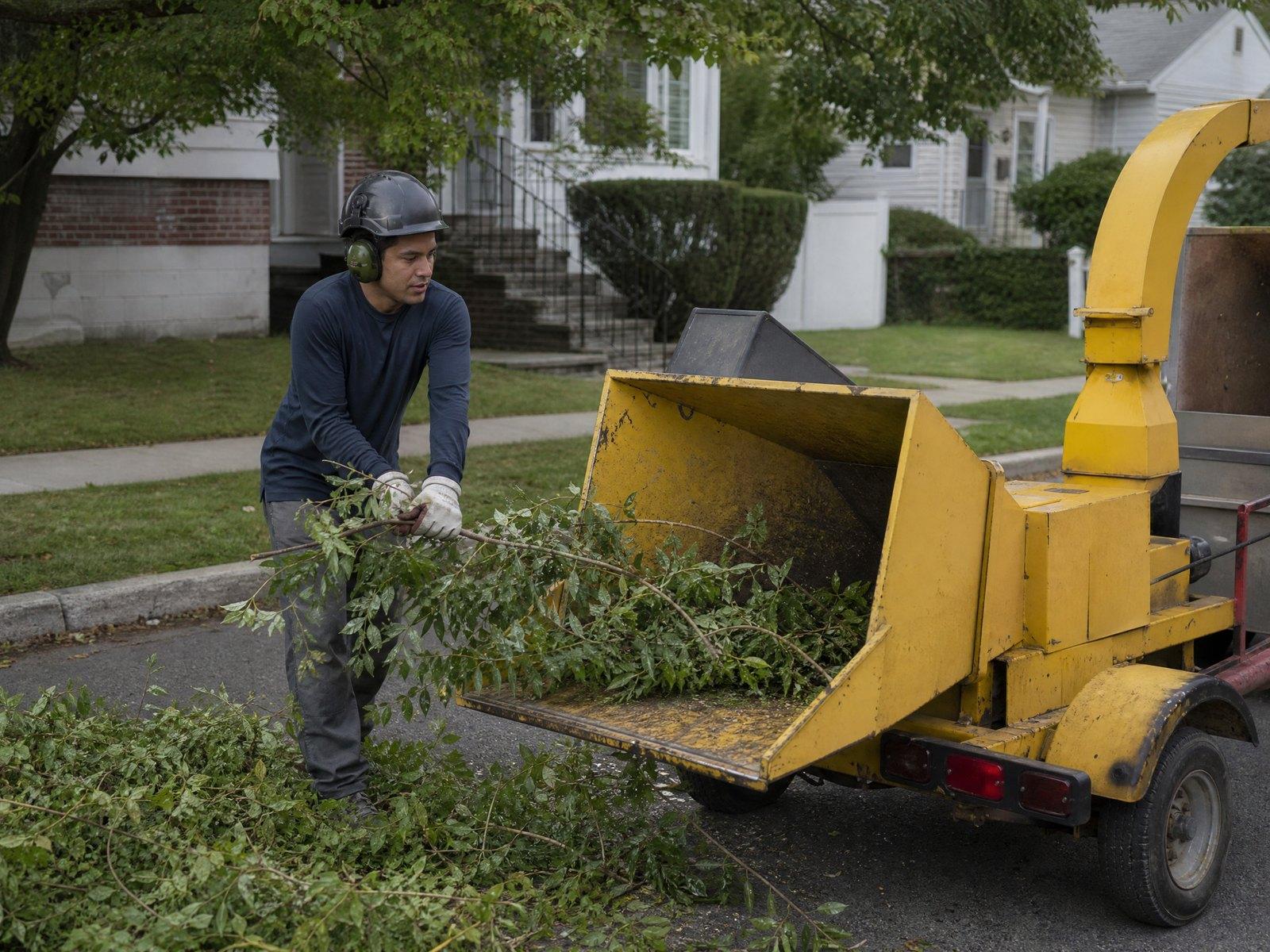
Overgrown fence lines, a backyard taken over by buckthorn or sumac, or a small lot being prepared for a shed, a pool or an addition. Clearing means cutting brush and small trees, chipping or hauling the material, and grinding or pulling stumps where needed. The quote should say what is removed, what stays, and whether the ground is left rough or raked level.
How Tree Work Should Be Handled
Safety Planned First
Houses, fences, wires and neighbours decide how a tree comes down. The method is planned before anyone starts a saw.
Prune Before You Remove
A healthy tree that is just too big or too close can often be pruned instead. Removal is suggested when it is the right call.
Cleanup in Writing
Whether the wood is chipped, hauled, cut into firewood or left, and whether the stump is ground, all written in the quote.
Permits Flagged
Many cities protect larger trees. The quote should say whether a permit is needed and who applies for it.
Homes and Small Properties
Houses, cottages, plexes, small apartment buildings and small commercial lots.
Form Only, Your Pace
Send the details when it suits you. Nobody calls you before you ask for a quote.
Five Steps, Every Job.
Request
You describe the job in the quote form: the kind of tree, roughly how tall, where it stands and what is near it.
Look
A local specialist checks the tree, its health and lean, the access, and anything it could hit on the way down.
Plan
Choose the method: climbing and rigging, a bucket truck, a crane, or a straight fell where there is room.
Quote
Written quote with the work, the cleanup, stump grinding if wanted, permits and how the yard is protected.
Work
Job done to the agreed scope, debris handled as agreed, then a walkthrough with you.
Tree Removal & Tree Care in Aurora, CO
Tree requests from Aurora go to crews who work locally, so the quote accounts for the species, storms and city tree rules in your part of the United States. Whether it is one dead tree, a crown that needs pruning or a stump in the lawn, start with the quote form.
Turnex Near Aurora
Turnex Tree Service in Aurora — Frequently Asked Questions
Do I need a permit to remove a tree?
Often, depending on where you live. Many cities require a permit to remove trees above a certain trunk diameter, even on private property, and some protect specific species or every tree in certain zones. Fines can be steep. A proper quote should say whether a permit is needed and who takes care of it.
How much does tree removal cost?
It depends on the height and trunk size of the tree, its condition, what is underneath it (a house, a garage, wires, a garden), how a crew and equipment can reach it, whether a crane or bucket truck is needed, and how much cleanup you want. A small tree in an open yard and a large maple over a roof are very different jobs. The only reliable number is a written quote after someone looks at it.
Is stump grinding included?
Not always. Some quotes include it, many list it separately. Grinding takes the stump below ground level so you can seed or plant over it, but it does not remove every root. Ask how deep it will be ground and whether the chips are left in the hole or hauled away and replaced with topsoil.
Can a tree near my house be pruned instead of removed?
Often, yes. Branches over the roof, dead wood and a crown that is too dense can be pruned back, and a weak fork can sometimes be supported with cables. Removal makes sense when the tree is dead or dying, leans badly toward something, or has serious decay in the trunk or roots.
When is the best time to prune trees?
For most deciduous trees, late winter while they are dormant: the structure is easy to see and the cuts close well in spring. Dead, broken or dangerous branches can be removed any time. Some species, such as oaks in areas with oak wilt, should not be pruned in spring and early summer.
A storm brought a tree down. What should I do first?
Stay away from it, especially if it is touching any wires, and contact your electric utility if lines are involved. Take photos for your insurer. Then send the details through the quote form, noting that it is storm damage, whether the tree is on a structure, and whether a driveway or door is blocked.
Who handles trees near power lines?
Lines on the street poles are the electric utility's responsibility, and only qualified line-clearance crews can work near them. Branches near the service line to your house may need the utility to disconnect or cover it first. Mention any wires near the tree in the form so the right specialist reviews it.
How do I get a quote?
Fill out the quote form with your city, the service you need, and a short description: the type of tree if you know it, roughly how tall it is, and what is near it. A specialist who works in your area follows up to look at the job. Requesting a quote is free and there is no obligation to go ahead.
A Tree That Needs Work? Get It Looked At.
Fill out the quote form with your city and a short description of the tree. A local specialist follows up to look at the job and give you a written quote. Free to request, no obligation.